Hi, I'm Mike.

What I've Done & What I've Learned

Who I am

I'm a creative director, writer, editor, and strategist. But over a career spanning agency and in-house, a more honest job title might be: a creative leader who figures out how to get things done.

This comes from working in experiential and event marketing, a field that comprises many disciplines, and often requires people to dive in, even if it's outside of their comfort zone. That's me: I'm not afraid to dive in. And follow where the story takes me.

I'd like to help you get to know me and my approach to work by showing you some key moments in my career and what I learned from them.

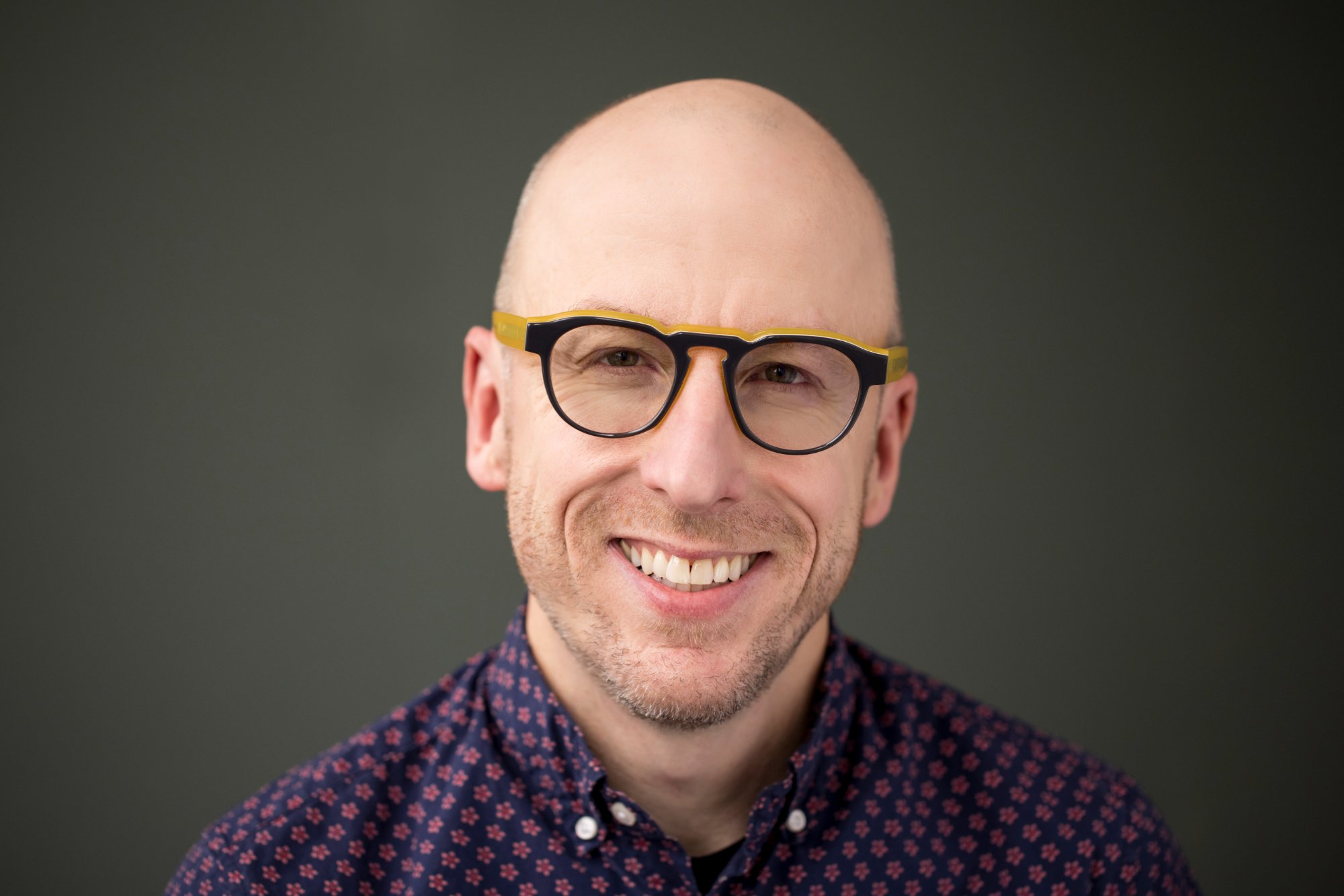
Mike Standish headshot

My eyeglasses tell you I'm a creative professional.

Let's start at the beginning

First, I wrote shipping news.

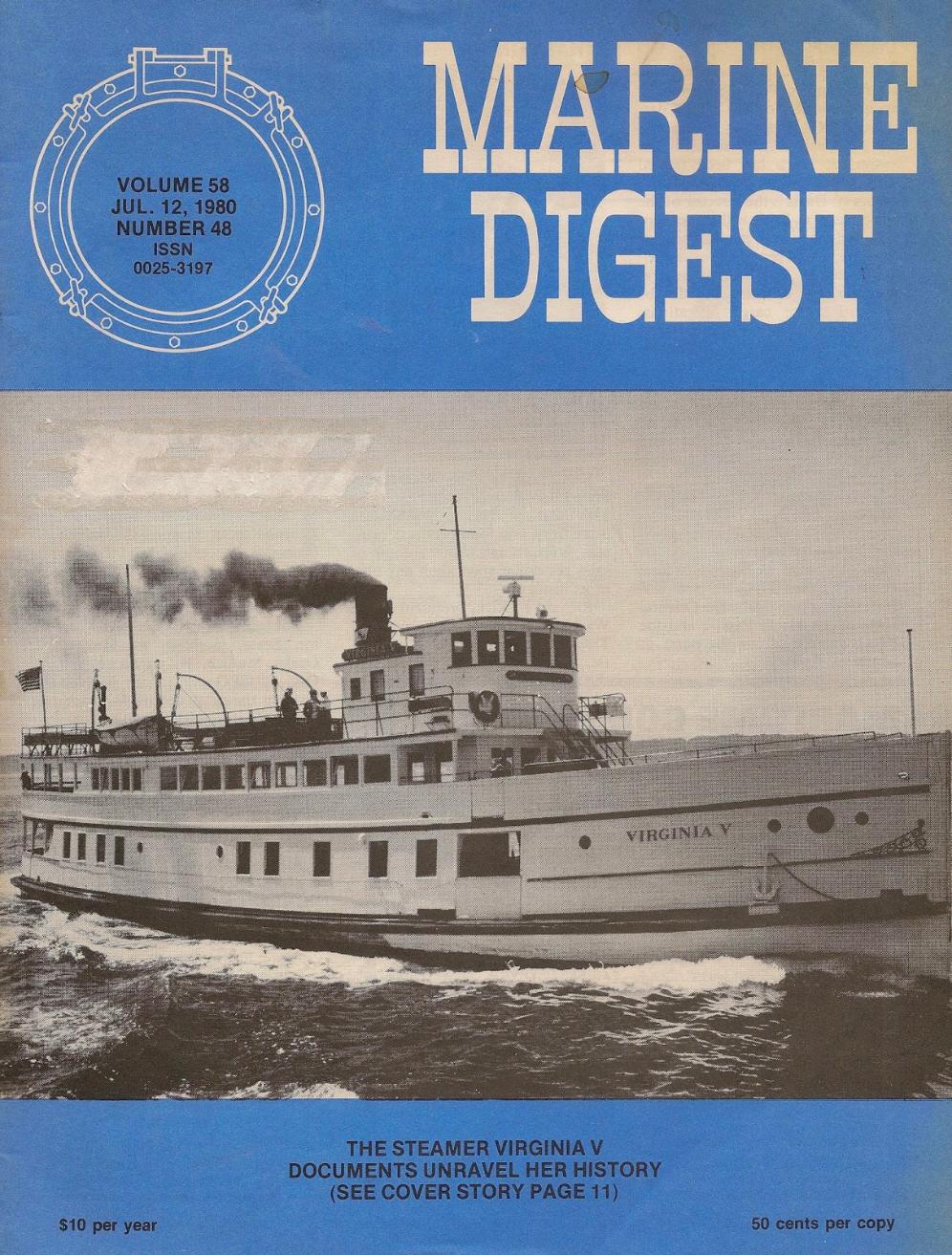
Rather than the novels and screenplays I thought I'd write out of college, I got a job writing shipping news for Marine Digest magazine. While others were moving to Seattle to work at a place called Amazon, I was happy to make $8 an hour to write about ballast water and invasive species to an audience of roughly 2,000 people interested in West Coast ports.

I found the job by opening the phone book and calling every newspaper and magazine to see if they wanted to hire me, a fresh college grad with no professional writing experience. It turns out they did.

Working in that very small newsroom taught me where to look for stories and how to get people to open up about what they're passionate about. Also: ballast water contains invasive species.

Marine Digest magazine cover

I edited technical manuals.

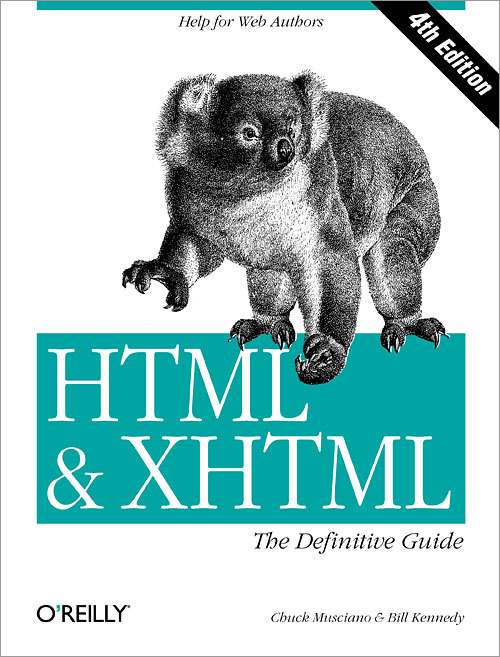
As the dot-com era was ramping up, I spent six months copy-editing an HTML how-to book. The series with the cute black and white animal drawings on the covers.

This work taught me how to get quickly up to speed on technical subject matter and how to adhere to a style guide, consistently and accurately.

O'Reilly book cover

I went to Disney.

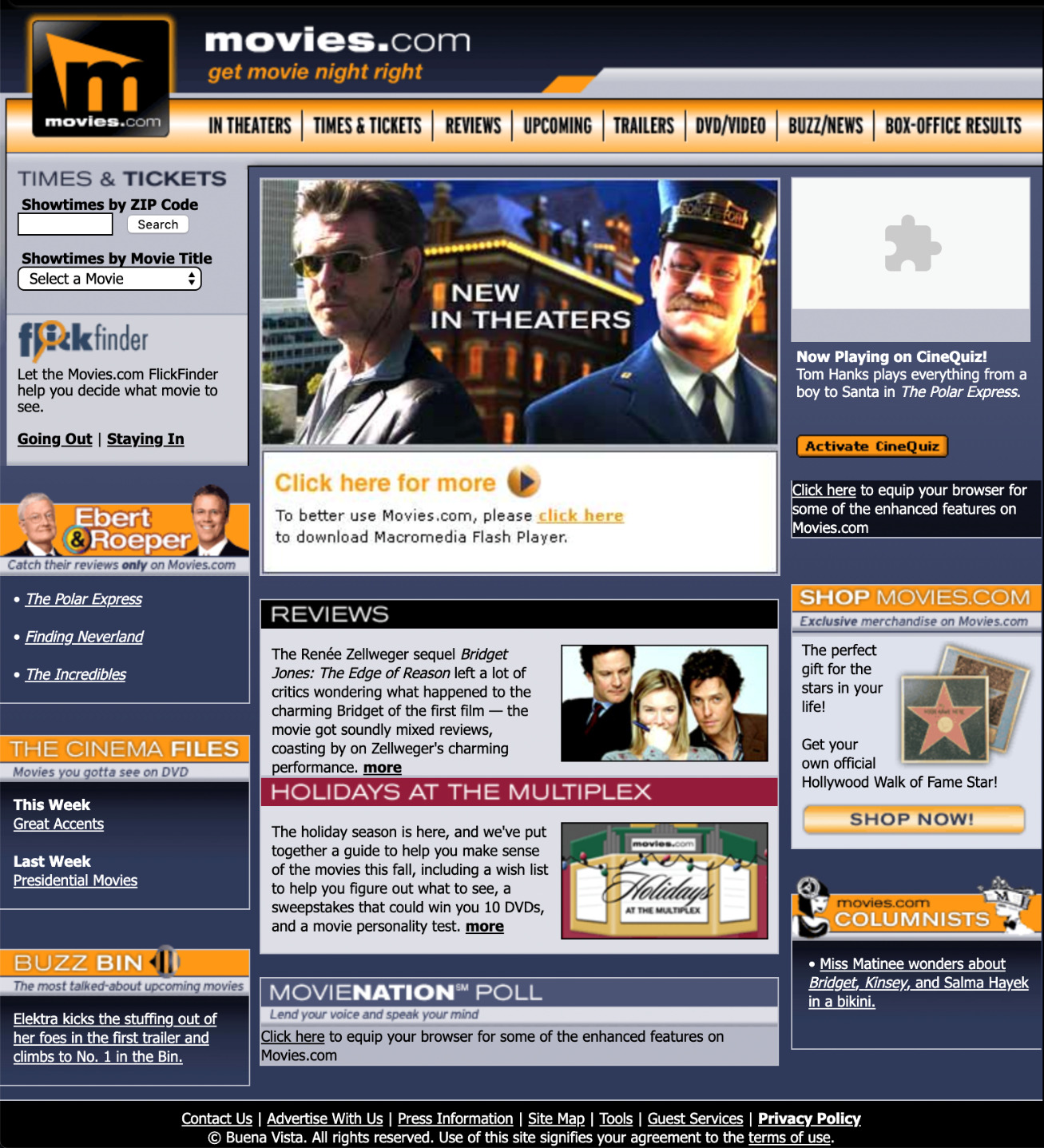
I started at the Walt Disney Internet Group as a copy editor at two daily entertainment news sites. Then I became a staff writer. Then an editor. Then the dot-com crash changed everything.

Our staff was cut. Then cut again. One of our sites was shuttered. In the middle of all this, we decided to launch a brand-new site, Movies.com. As we clawed our way out of the crash, our site traffic grew. I became a senior editor, a columnist, a video maker. Our team was small, which meant I got to do all the things. It was heaven.

This is where I learned that tech companies should have revenue models, how to run a tight editorial calendar, how to interview famous people and review albums, and how to build and launch a product. I also learned that I didn't want to move to Los Angeles to advance my career.

Disney

I became a creative director.

I answered a mysterious Craigslist ad for a position that sounded exactly like me and had no idea what I was getting myself into. I didn't even know what a creative director did. I ended up doing it for almost 11 years. It's my vocation and the thing I'm best at.

During my tenure at PBJS we grew from a 20-person indie shop to a 60-person Publicis agency. Our biggest client was Microsoft. I was thrown into the deep end and found myself writing, directing videos, doing exec presentations, building a traveling museum, you name it. It felt like home.

This role taught me to have empathy for clients and stakeholders, how to rally a team around an idea, the value of ideas that can be executed, and how to be a conduit between and translator for various disciplines. I learned the value of the skills of a generalist, and how to lead a team and manage people.

Creative direction work

The Gates Foundation called.

I had a unique opportunity to move from tech and experiential marketing to global health and development communications. I was tasked with building and evolving a creative team in the comms department, implementing new processes and working with better agencies. In short: upping the Foundation's creative game.

Here I learned how to become a subject matter expert fast, how to salvage team morale and get back on track, the value of process (and the right amount of it), and how to create content for global markets. I also learned how to convince people on different teams to all work from and contribute to a single content calendar.

Gates Foundation

Let's see some work

Windows + Devices Events

Microsoft

Overview

On May 20, 2024, Microsoft introduced the world to a new category of Windows PCs designed for AI: Copilot+ PCs.

The event featured multiple chapters, each led by a Microsoft executive and supported with demos, videos, and guest appearances.

Most recently I supported Pavan Davuluri's Windows + Devices team at Build 2025, which included:

  • Developing a content strategy for keynote presentations and product demos
  • Scripting keynote speakers and their product demos
  • Supporting the rehearsal process leading up to the event
Copilot+ PC Launch

What I did

My remit during the keynote development process:

  • Partner with comms team members to outline and write exec talk tracks
  • Ensure that talk tracks align with business, PR, and comms goals
  • Ensure that voice/tone is consistent throughout the event and its multiple speakers
  • Work through the rehearsal process with comms teams and execs to make sure the scripts give presenters everything they need to be successful
Event work

Brand Love Activations

Microsoft

Overview

Working with the event design team, I serve as the writer and editor for a variety of brand love activations that take place throughout the year.

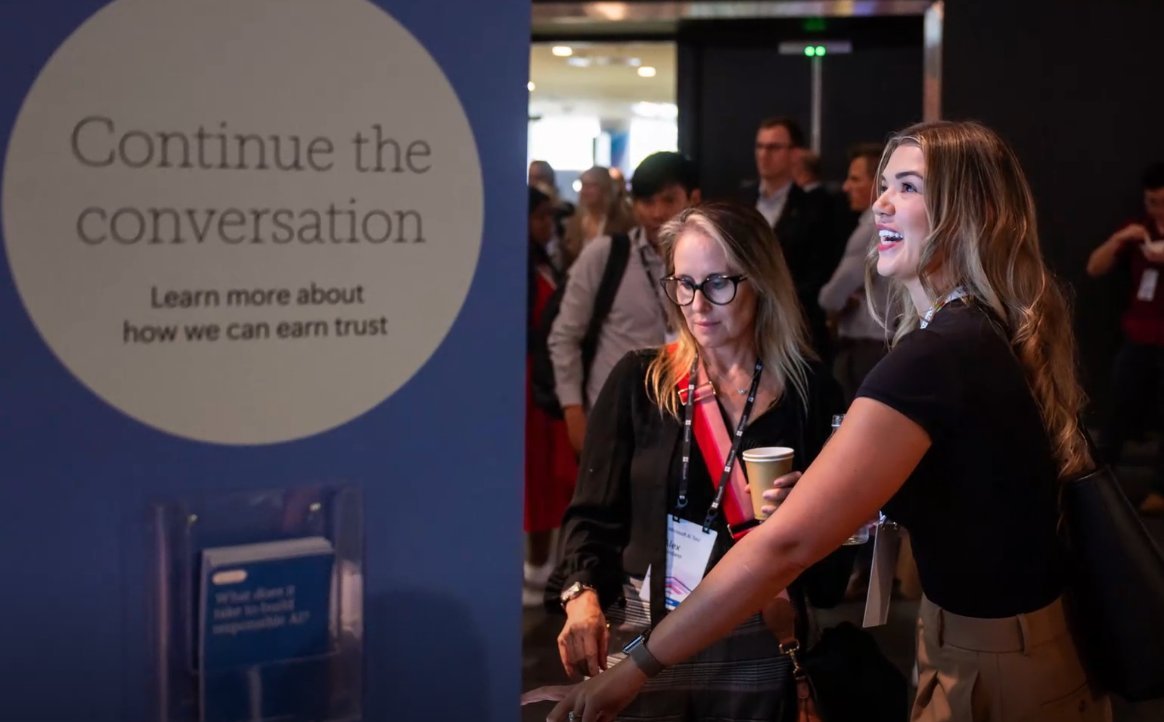
These activations aim to increase brand affinity for Microsoft with photo opportunities and interactive content experiences.

Brand activationBrand activation

What I did

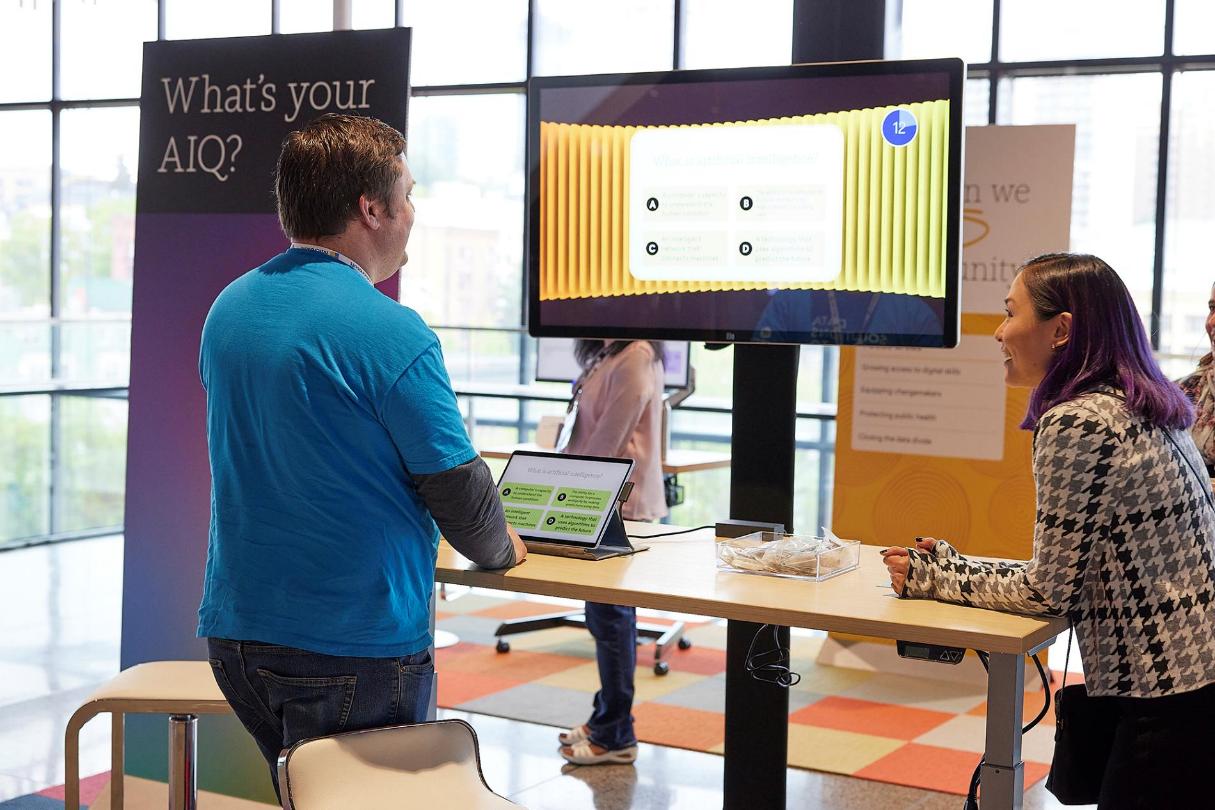
Recent brand love activations have centered on AI, with the goal of starting critical conversations around AI and how it intersects with Microsoft's four AI for Good commitments. For these I wrote a quiz on the history of AI, sourced multiple AI for Good blogs from within Microsoft and reimagined them in the form of a physical brand activation, and wrote copy to explain complex tech concepts to event attendees at a glance in a setting with short attention spans.

This work reinforced that interactive experiences at events have to earn their attention, and that creating an experience that is eye-catching yet substantive requires understanding what attendees truly care about and boiling complicated subject matter down to its essence.

AI activationAI activation

Goalkeepers at the United Nations

Bill & Melinda Gates Foundation

Overview

In 2015, world leaders agreed to 17 Global Goals for Sustainable Development to achieve a better world by 2030.

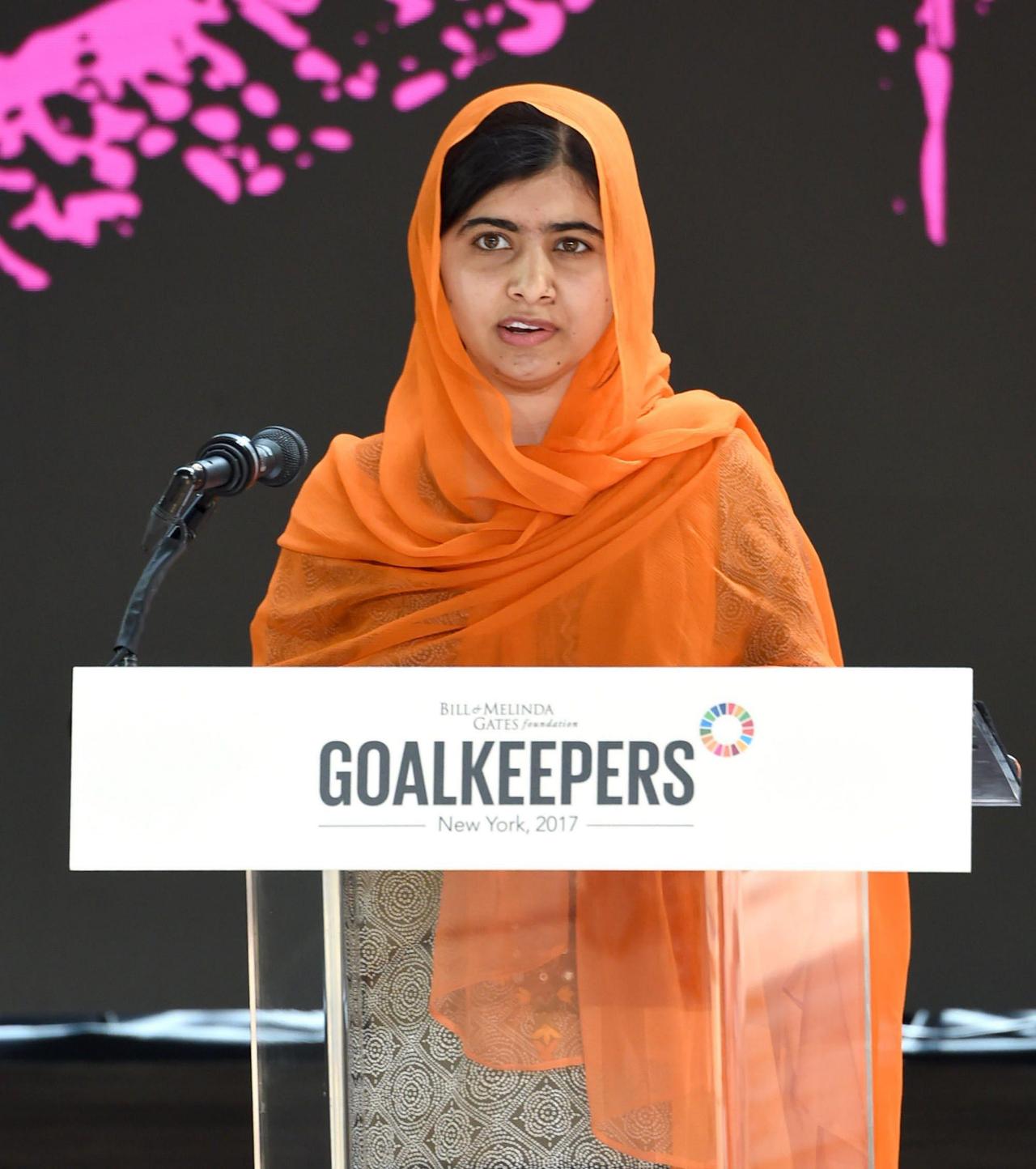
Started by the Bill & Melinda Gates Foundation, Goalkeepers is a catalyst for action toward these goals—including Prime Minister Justin Trudeau, President Barack Obama, and Malala Yousafzai, who shared their stories of leadership and innovative solutions that are driving progress.

Goalkeepers

What I did

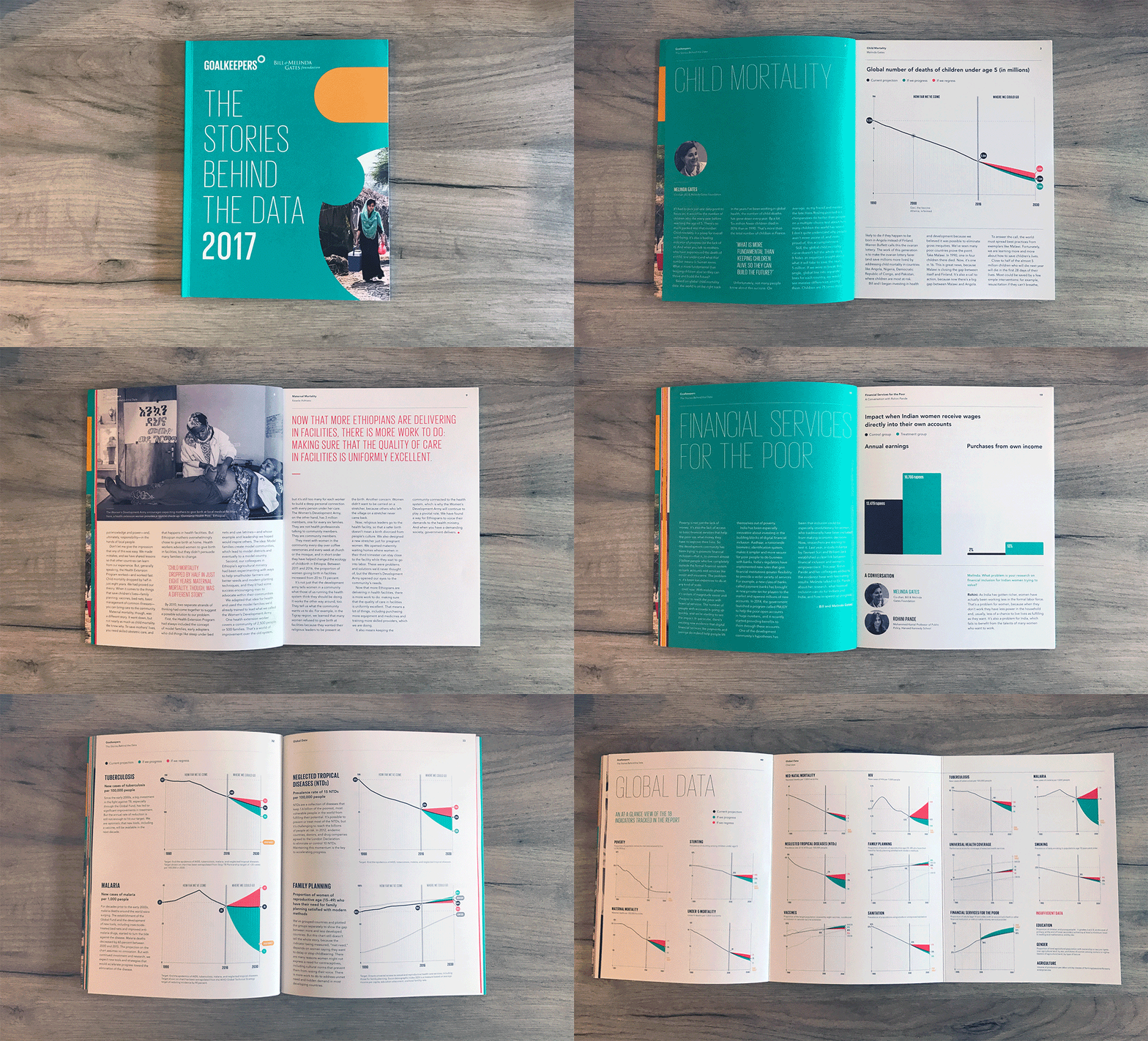
Goalkeepers has three components: a campaign to drive awareness, engagement, and media coverage; an event that takes place over two days at the United Nations General Assembly; and a data report, which consists of a print book and a website featuring data visualizations, videos, and essays.

I worked as creative lead on the print data report, videos, and website, and as a creative consultant on the event and campaign strategy. I edited and supervised production of the centerpiece of the Goalkeepers experience, the foundation's first ever data report, featuring stories of people around the world working to solve critical health and development problems, as well as data visualizations that tracked progress across every global goal.

This work comprised the print report and its companion website, which featured 6 videos and was translated into 6 languages. I led the effort from Seattle, working with teams in Europe, Africa, and China.
Goalkeepers workGoalkeepers work

The campaign & event

I worked with our campaign and social teams to ensure the event narrative unfolded seamlessly across all our channels, including regional offices in London, Beijing, and Johannesburg. This included a launch video with Bill and Melinda, which I wrote and creative-directed.

I consulted on all creative elements of the United Nations event, including stage design, guest speakers, show flow, and screen content. During the second year, my role expanded to include consulting on Bill Gates' keynote session, as well as driving the process by which we selected an event-production vendor.

Launching an event at an organization like the Gates Foundation is enormously complicated with so many moving parts. Being one of the few people on the team that had worked both in events and digital content development was invaluable, as was understanding the value of being the person who builds bridges between teams and ensures stakeholders are aligned with campaign strategy.

Data report

Campaign Content

Bill & Melinda Gates Foundation

Overview & Approach

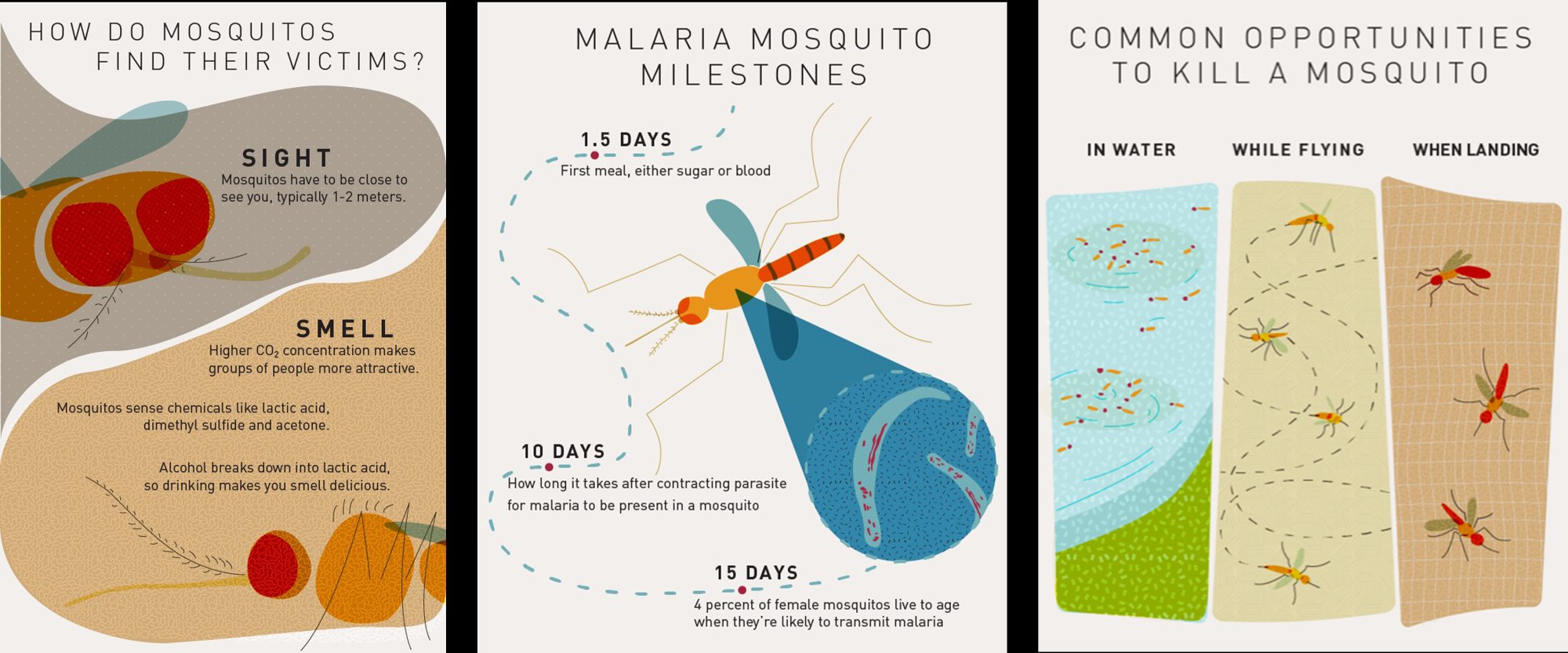
The Foundation comprises 29 different strategy teams, each dedicated to a specific area of concern, ranging from malaria to family planning to education. The external comms team works with all of them to program a slate of videos, data visualizations, and other content to support their goals across channels.

I treated our strategy teams like clients, and vendors as an extension of our content team. This approach allowed our small team to operate globally, creating content targeted at audiences in the United States, Canada, the UK, France, Germany, China, India, and South Africa. We worked with strategy teams to build creative briefs and used those briefs to win consensus from all Foundation stakeholders. Then, I led the development of content, from writing scripts and blogs to selecting vendors and steering them through the execution of videos and data visualizations.

This work taught me how to get up to speed quickly on a variety of subjects—it didn't take long for me to understand enough about malaria eradication to write a script that passed muster with subject matter experts. Working with our China team, I learned what communication styles performed best on social channels unavailable in the US and how to create content that felt authentic to that region.

Game of Thrones Exhibition

HBO International Marketing

Overview

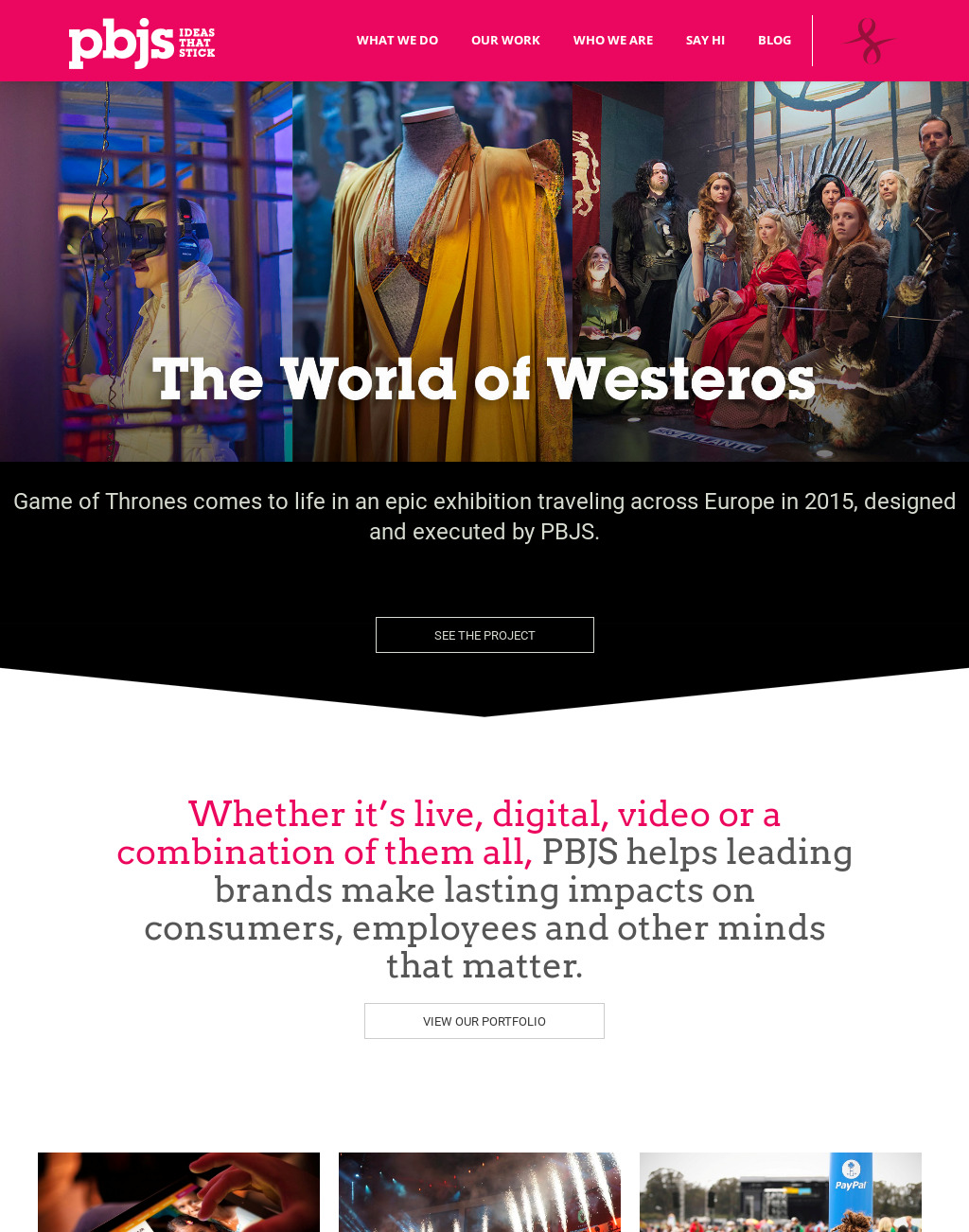
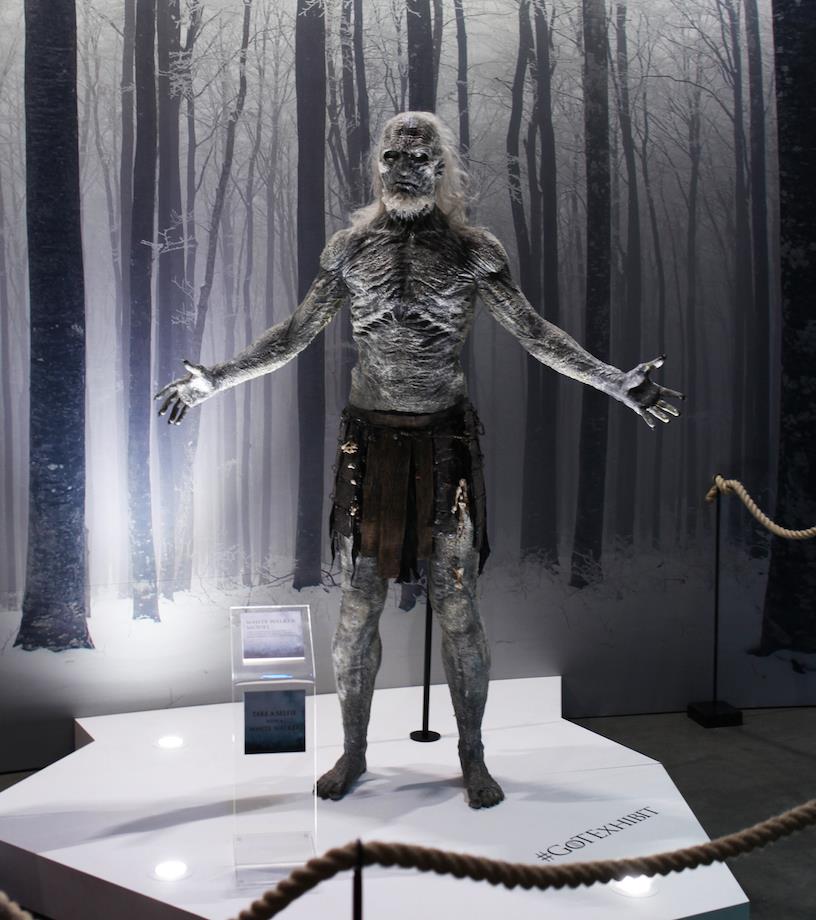
PBJS (now Publicis Experiences) developed and produced the 2015 Game of Thrones Global Exhibition, taking an immersive, sharable experience across Europe. It was a collaboration between three agencies, comprising a campaign to drive attendance, the design and build of a traveling exhibition space, and digital content-creation opportunities for fans.

The tour engaged nearly 100,000 in its six-city tour from London to Tel Aviv. Media coverage included The Guardian, Forbes and Entertainment Weekly.

Game of Thrones Exhibition

My role

I was the creative and design director of the exhibition space, including curation of all props and costumes. Additionally, I was co-creative director for all digital and social content in collaboration with our digital agency partner. We were a small team, so it's fair to say you can add a significant amount of project management to my job description, too.

I developed the winning pitch alongside two of my London colleagues from Publicis UK and Poke, then developed an exhibition narrative and creative strategy – a fan journey that traced a path through key scenes from season 5 and put a spotlight on important characters and memorable moments. The pitch hinged on the show's morbid reputation and was billed as "The Game of Thrones experience where everybody dies."

Exhibition role

Design, production & curation

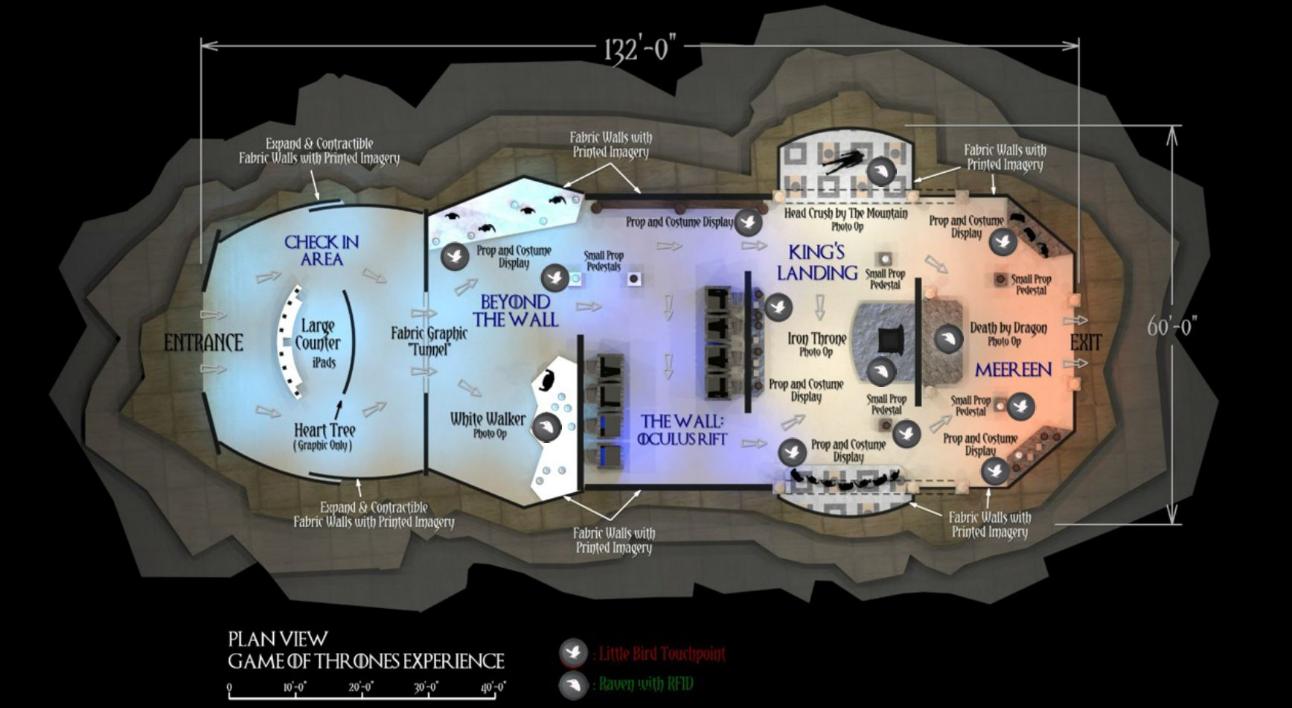
Working with my design and production teams, we created a design approach that was immersive yet practical – important given that the exhibit had to be transported around Europe over the course of two months. With the aim of transporting fans into the world of Westeros we created 15' to 30' tall fabric walls using images from the show and a flexible exhibition space that could be rearranged to fit each venue, while maintaining the story arc defined in our content strategy.

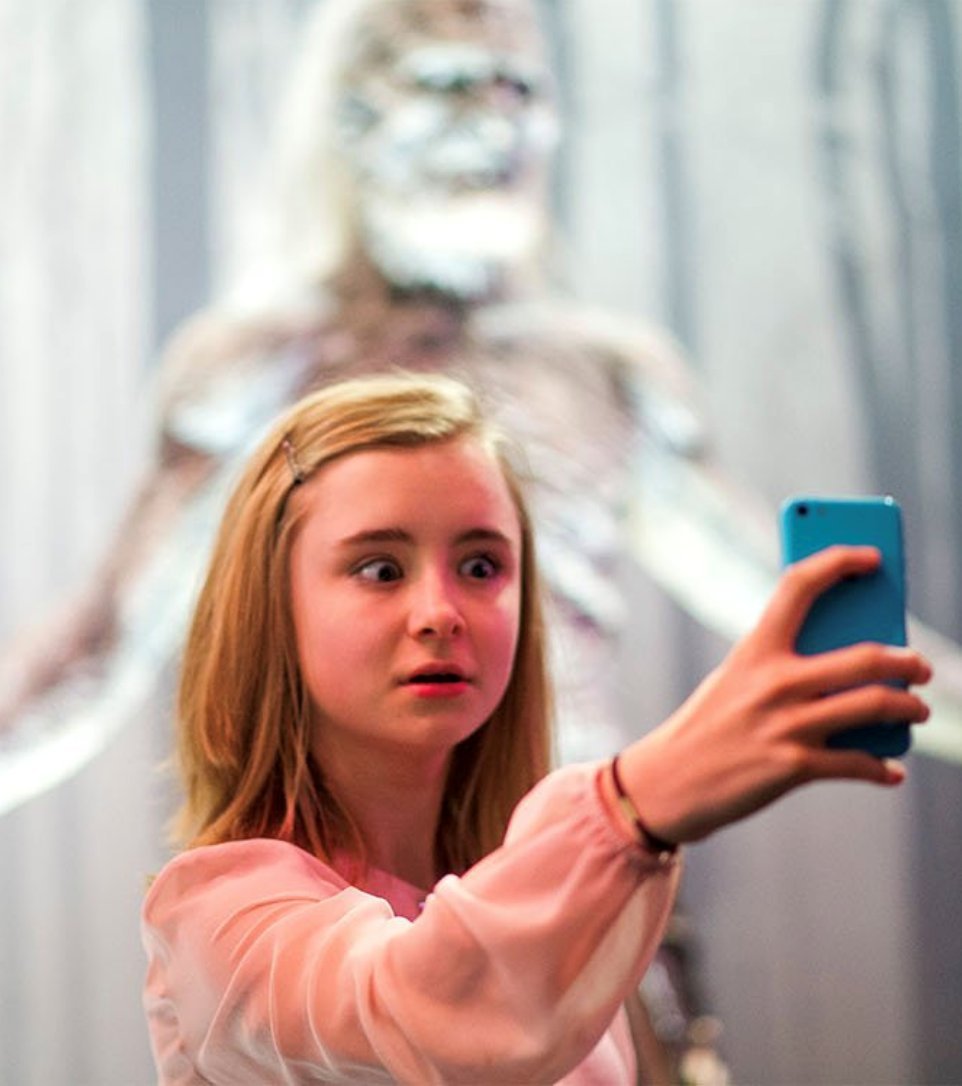
On the show's set in Belfast, I worked with our client to curate a collection of more than 200 props and costumes and placed each within the exhibition's content plan. The exhibition also featured two content-creation opportunities – transforming yourself into a white walker and being torched by dragon fire – which were delivered to fans' phones via a mobile website seconds after leaving the scene.

The exhibition embodied all that I love about experiential and event marketing because I got to do a bit of everything. Building an experience for hardcore fans set a high bar for subject matter expertise and authenticity, requiring painstaking attention to detail – every costume, every prop, every line in every video had to be perfect. The project really polished my project management and account skills – leading three agencies through something as complicated as an exhibition tour, with both physical and digital components, was a real test.

Exhibition workExhibition work

Imagine Cup

Microsoft

Overview & My Role

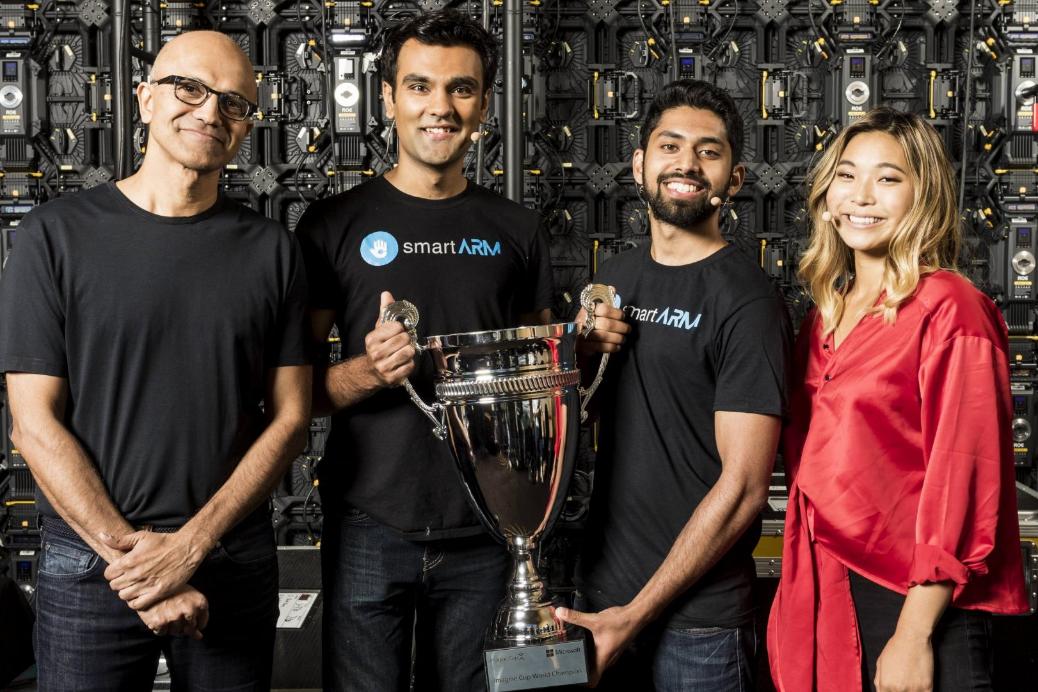
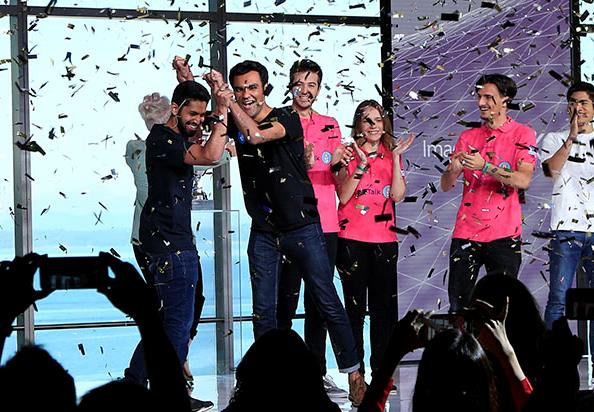
Imagine Cup is a global competition that encourages computer science students to use their creativity, passion and coding skills to create the next big breakthrough. Finalists from around the world travel to Seattle to compete in a two-day competition, with the winner chosen on stage with celebrity guests and judges from Microsoft and other companies.

For three years, I served as lead writer and creative consultant, working with Microsoft's Developer & Platform Evangelism team to develop the approach to each year's event and write all stage and screen content. I evolved the event's format from a multi-hour stage production to a 30-minute event shot in front of a studio audience and intended for online viewing. I also worked with celebrity guests and Microsoft leaders to ensure they showed well onstage, revising their scripts and stage content during rehearsals.

Crucial to the success of this project was listening to execs, understanding their personalities and speech patterns, and writing for them in a way that helped them feel comfortable onstage. Plus, having empathy for international students, all of whom had traveled to the United States to compete in a high-pressure coding competition. Ensuring that the show format helped them present themselves in the best possible light was of utmost importance.

Imagine CupImagine Cup

Contact Mike